What Are the Types of Export? Details
- GoTradeGo
- Blog
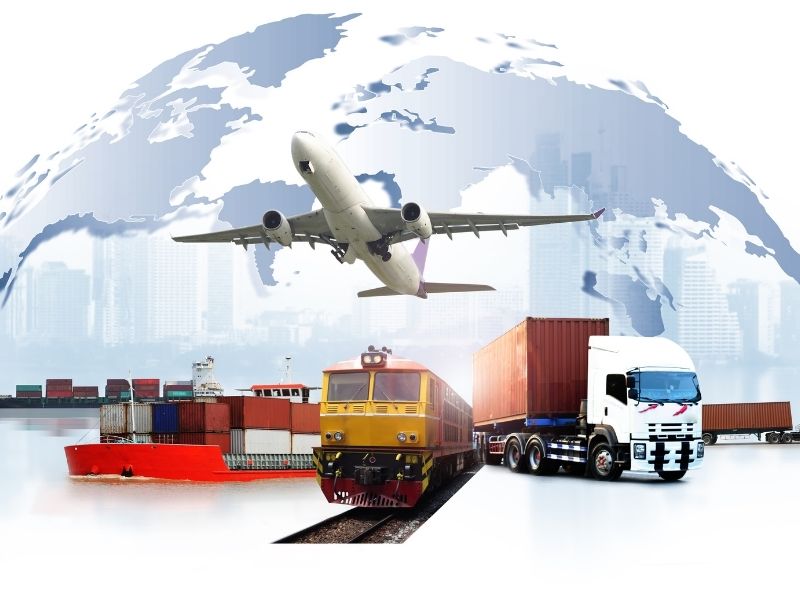
What Are the Types of Export? Details
- Date :August 2, 2021
Exports are services and goods produced in one country and purchased by people in another country. With the development of countries today, exports have also grown.
Exports are goods and services produced in one country and purchased by the people of another country. Today, with the development of countries in various fields, exports have also developed and diversified. Consequently, different types of exports have emerged.
It doesn't matter what the goods or services are or how they are shipped. Exported products can be shipped or carried in personal baggage on an airplane. When something is produced domestically and sold to a foreign country, it is called export. So, what are the types of export? In this article, we will discuss the types of export.
1) Consignment Export
Consignment export refers to the process of finalizing the sale of goods within 365 days of the declaration date, and then shipping the goods to buyers or the exporter's branches or representatives located abroad.
In consignment export, the seller ships the goods to their agent or representative. Although physical possession remains with the agent, the exporter retains legal ownership of the goods. When the agent sells the goods, they make the remittance to the actual customer, the exporter. If the agent is dishonest or fraudulent, there is no financial security for the exporter. This is because there is no supporting document in the form of a promissory note to protect them from default.
When the value of the goods cannot be determined, the exporter must declare the saleable value, taking into account the current market conditions. First, the exporter issues a sales invoice. The phrase "Consignment Export" must be added to this invoice.
Buyers have the opportunity to inspect the goods and, if satisfied with the quality, may be willing to pay a higher price, thus enabling them to sell their goods. When shipping goods on consignment, the exporter is obliged to declare the selling price of the goods on the GR form.
2) Export on Credit
Export on credit is a type of export that allows export proceeds to be brought into the country beyond the time limits stipulated in Turkish currency protection legislation, provided that two or more parties are excluded from the credit agreement.
Applications for export credit are submitted to the associations along with the original and translated sales contract, which includes the type of goods, payment plan, and payment term. The export credit period is approximately 2 years for consumer goods and 5 years for investment goods.
Export credit applications exceeding these periods are finalized by the Undersecretariat.
You might also be interested in: What Should an Export Roadmap Look Like?
3) Transit Export
Transit trade is the practice of purchasing goods or products from one country and selling them back to another country without bringing them into our own customs territory. Goods involved in transit trade are not subject to any taxes or duties. If we bring the goods we purchase to our country and sell them to another country via bonded warehouses, we are required to prepare a warehouse declaration. In this type of trade, the company in the country where we purchase the goods must issue an invoice to us. We must also issue an invoice to our customer in the country where we sell the goods.
The invoice to be issued to the customer should be in English and should not include VAT.
In our country, for the purpose of taxing our earnings, invoices issued in Turkish must be prepared without including VAT.
Since we didn't pay VAT when purchasing, and we are exporting, VAT shouldn't be included in these invoices.
Generally speaking, transit export is a method of trade. It is not only used as a payment method.
The most important point that distinguishes transit trade from other logistics operations is that, since there is no actual export or import, customs declarations cannot be issued for these goods.
In transit trade, the payment method used for goods and services is irrelevant. All payment methods are considered within the scope of transit trade.
You might also be interested in: What is Export?
In this article, GoTradeGo has shared information about different types of exports. We hope you find it useful, and thank you for reading. Continue following us for more content.